2026/01/12-2026/12/07
From$2,760
Full Name*
Email Address*
Your Enquiry*
* I agree with Terms of Service and Privacy Statement.
Please agree to all the terms and conditions before proceeding to the next step
Save To Wish List

Adding item to wishlist requires an account

935

Got Questions?

Call us or email us if you have any questions.

(604) 436-2288

info@qualitour.ca

Korea 12 Days Authentic Tour (All rates are listed in USD.)

0
  • 12 Days 11 Nights
  • People : 2 to 20 pax
  • Guaranteed departure once a month in 2026
  • Tour Code: SEL12D11ETOUR15

Experience Authentic Korea. The tour starts from Incheon Airport and directly brings you to Seoul. The end of the tour will take you back to Incheon Airport for a convenient transfer. 

  • 12 days South Korea’s main traditional spots and experiences
  • This tour package is recommended for couples, families and friends who want to take snapshots. Come to Korea and take your pic of the day!
  • Accommodation: 3-Star Hotels ★★★ Throughout the Trip
     

This tour contains special experiences such as:
Making Korean red pepper paste
Participating in a traditional tea ceremony
Making Korean traditional paper
Eating various Korean food

Departure & Return Location

Arrival Airport: Incheon 

Departure Airport: Incheon 

Departure Date/Times

2026 departure on

January 12th

February 2nd

March 16th

April 6th

May 11th

June 8th

July 6th

August 24th

September 7th

October 12th

Novomber 2nd

December 7th 

Rates

USD$ 2,760 / per person

USD$ 720 extra for single supplement

*The price is same for adults and children
*No charge for under 24 months (ID verification)
*For private group requested, please contact us via email: info@qualitour.ca to get more info

Price Includes

  • Accommodation (11N/ Twin sharing room based) + Breakfast
  • 10 Lunches
  • All transportations
  • English speaking tour guide
  • All entrance fees

Price Excludes

  • International airfare and visa fees
  • Personal expenses
  • Travel insurance and uncontrollable extras
  • Dinners
  • Overtime charge for transportations and tour guide
  • Tipping for tour guide and driver
What to Expect

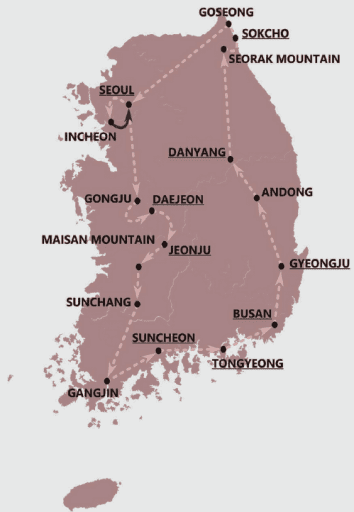
Day 1: Incheon Airport – Seoul Hotel

Day 2: Seoul

Day 3: Seoul – Gongju – Daejeon

Day 4: Daejeon – Maisan Mountain – Jeonju

Day 5: Jeonju – Sunchang – Gangjin – Suncheon

Day 6: Suncheon – Tongyeong

Day 7: Tongyeong – Busan

Day 8: Busan – Gyeongju

Day 9: Gyeongju – Andong – Danyang

Day 10: Danyang – Seorak Mountain – Sokcho

Day 11: Sokcho – Goseong – Seoul

Day 12: Seoul – Incheon Airport
Photos
Itinerary

Day 1ICN - Seoul

  • Meet with a KOREAN-SPEAKING DRIVER ONLY and transfer to Seoul hotel.
  • Free time without a tour service. (Hotel check in is available from 15:00)
  • Overnight at hotel in Seoul.

Meals: N/A.
Hotel: Mayplace Hotel Seoul Dongdaemun or similar ★★★(Seoul)
Day 2Seoul

After breakfast, meet with a tour guide at hotel lobby and start the tour.

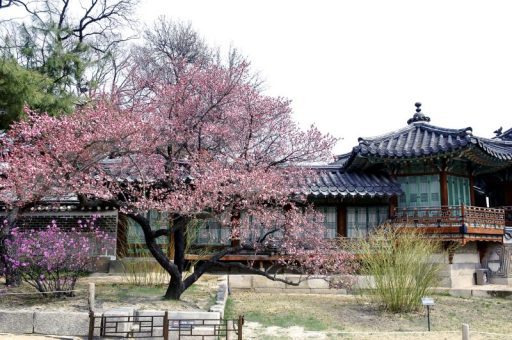
  • Changdeokgung Palace Complex [UNESCO]: It was the second royal villa built following the construction of Gyeongbukgung Palace in 1405. It was the principal palace for many kings of the Joseon Dynasty, and is the most well-preserved of the five remaining royal Joseon palaces. The palace grounds are comprised of a public palace area, a royal family residence building, and the rear garden. Known as a place of rest for the kings, the rear garden boasts a gigantic tree that is over 300 years old, a small pond and a pavilion.
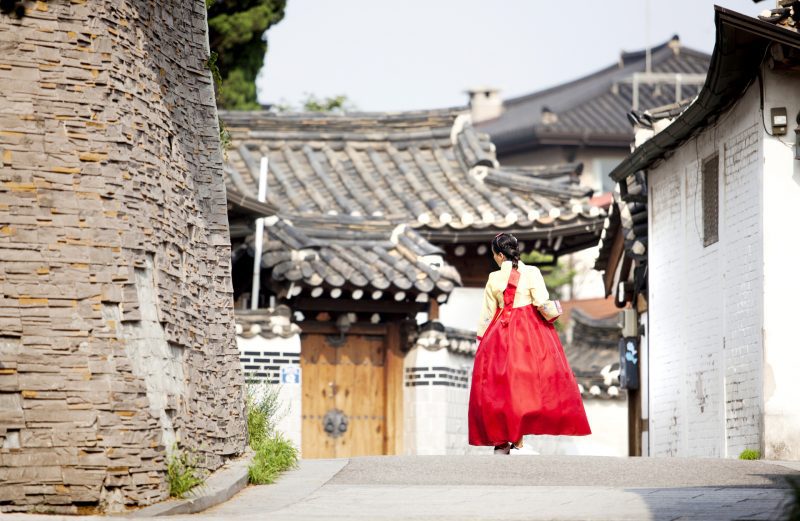
  • Bukchon Hanok Village: Surrounded by Gyeongbokgung Palace, Changdeokgung Palace and Jongmyo Shrine, Bukchon Hanok Village is home to hundreds of traditional houses, called hanok, that date back to the Joseon Dynasty. The name Bukchon, which literally translates to “northern village,” came about as the neighborhood lies north of two significant Seoul landmarks, Cheonggyecheon Stream and Jongno. Today, many of these hanoks operate as cultural centers, guesthouses, restaurants and tea houses, providing visitors with an opportunity to experience, learn and immerse themselves in traditional Korean culture.
  • Gwangjang Market: Gwangjang Market was the first permanent market in Korea and continues to thrive as a popular tourist destination today. The second floor of the market is filled with silk, satin, and linen bed-sheet stores, which are the largest and most famous in Seoul.
  • Afterwards, you will go to Seoul Kimchi Academy to learn how to make the iconic Korean dish that is kimchi and try on traditional Korean clothing known as Hanbok.
  • Dinner: Not provided
  • Overnight at Hotel in Seoul

Meals: Breakfast, Lunch.
Hotel: Mayplace Hotel Seoul Dongdaemun or similar ★★★(Seoul)
Day 3Seoul - Gongju - Daejeon

After breakfast, meet with a tour guide at hotel lobby and start the tour.

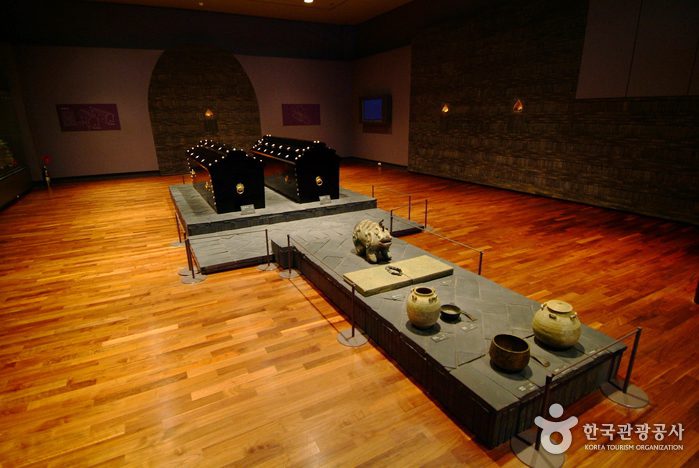
  • Gongju National Museum: Gongju National Museum manages and preserves the cultural treasures excavated from northern Chungcheongnam-do. It takes special care of cultural treasures discovered at the Muryeong Royal Tomb in 1971. The Muryeong Royal Tomb is the tomb of King Muryeong (501-523) from the Baekje Period, and his queen consort. You can view most of the relics from the tomb at the museum. The current buildings were specifically built to exhibit these relics.
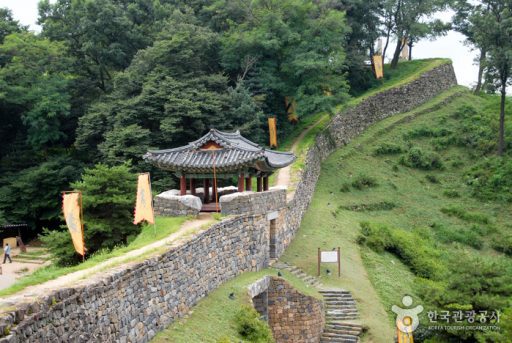
  • Gongju Gongsanseong Fortress [UNESCO]: Located in Gongju-si, Gongsanseong Fortress is a mountain castle which was established during the Baekje Period (234-678). It is worth the visit for its historical and cultural significance, and also for the beautiful view Geumgang riverside and the castle’s trail.
  • Royal Tomb of King Muryeong [UNESCO]: The Royal Tombs in Songsan-ri are widely known as the Royal Tombs of Baekje or the Tomb of King Muryeong. They are located on the upper southeast ridgeline of a small hill (75m high), standing in the south of the Geumgang River and extending to a southeast direction. The Songsan-ri Tombs and Royal Tomb of King Muryeong (reign 462-523) contains representative relics of the Baekje period (234~678). The Songsan-ri Tombs contain the graves of kings from the period when Baekje’s capital was Gongju, and it is believed to contain 10 such graves. Only seven graves have been discovered so far.
  • Then you could enjoy in the city of Daejeon with the Natural Hot Spring Foot Spa.
  • Dinner: Not provided
  • Overnight at Hotel in Daejeon

Meals: Breakfast, Lunch.
Hotel: Skypark Hotel or similar ★★★ (Daejeon)
Day 4Daejeon - Maisan Mountain - Jeonju

After breakfast, meet with a tour guide at hotel lobby and start the tour.

  • Maisan Mountain: It is a Jeollabuk-do situated mountain composed of two peaks of 667 and 673m. Maisan literally means “horse ears mountain”, due to its appearance..
  • Omokdae in Jeonju: Omokdae is located on top of a steep hill. The pace is a good spot to see the hanok village and during winter, the snow covered roofs make it even more beautiful.
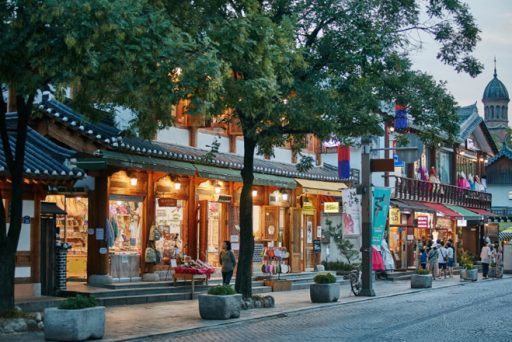
  • Jeonju Hanok Village: It is located in the city of Jeonju and overlaps Pungnam-dong and Gyo-dong. There are over 800 traditional Korean hanok houses. While the rest of city has been industrialized, Hanok Village retains its historical charms and traditions. Jeonju Hanok Village is especially beautiful for its unique roof edges, which are slightly raised to the sky. Hanok houses are generally divided into two sections, Anchae and Sarangchae. Sarangchae is where the men dwell, and is referred to as the Seonbi room. Because men and women had to remain separate, Anchae is situated deep inside the house so that it is secretive and quiet. Another trait of Hanok is that all the houses are heated with ondol, a unique sub-floor heating system. Since Koreans enjoy sitting, eating, and sleeping on the floor, it needs to remain heated. A part of Hanok has been set aside so that tourists can experience traditional Korean life, called Hanok Life Experience Hall. You can enter the rooms to experience the warm floor first-hand. An advantage of this system is that it is warm in the winter and cool in the summer. In the village, you will be able to participate in a traditional Korean paper-making workshop (Hanji) in Jeonju’s traditional Hanji center.
  • Gyeonggijeon Shrine: Historic Site No. 339, Gyeonggijeon Shrine was erected in 1410 and holds the portrait of King Tae-jo, the founder of the Joseon Dynasty. The King and his wife’s mortuary tablets are enshrined here at Jogyeong Shrine. The structure was partially destroyed during the Imjin War (1592-1598), and the existing structure was remodeled in 1614. Inside Gyeonggijeon, the portraits of King Tae-jo and other successive kings such as Sun-jong, Cheol-jong, Yeong-jo and many others can be found on display. The carriage used to move the mortuary tablets as well as carriages used to transport dignitaries and individual chair-like carriages are also on display.
  • Dinner: Not provided
  • Overnight at Hotel in Jeonju

Meals: Breakfast, Lunch.
Hotel: N-Bridge hotel or similar ★★★ (Jeonju)

Day 5Jeonju - Sunchang - Gangjin - Suncheon

After breakfast, meet with a tour guide at hotel lobby and start the tour.

  • transfer to Sunchang where you will have the opportunity to make and taste gochujang, the Korean red pepper paste. The main ingredient is gochugaru, a chili pepper powder.
  • Baekunok Traditional Korean Tea Museum: The Tea Museum of Korea was built to preserve Korea’s tea culture and celebrate the history of Boseong tea, which dates back as far as the Baekje Era. Each of the three floors of the museum is unique and focuses on a different aspect of tea.
  • visit Wolnamsaji Temple near the Baekundong Garden and have the experience of tea ceremony.
  • Dinner: Not provided
  • Overnight at Hotel in Suncheon

Meals: Breakfast, Lunch.
Hotel: Venezia Hotel or similar ★★★ (Suncheon)
Day 6Suncheon - Tongyeong

After breakfast, meet with a tour guide at hotel lobby and start the tour.

  • Suncheonman Bay Wetland Reserve: The fields in Suncheonman Bay is thickly covered with reeds taller than a full-grown man. It is the biggest colony of reeds in Korea. The image of the entire field swaying in the wind is as dazzling as waves on the sea. It is also a natural habitat for birds of over 140 species.
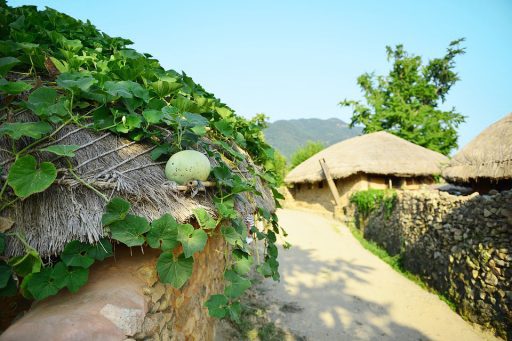
  • Naganeupseong Folk Village: It is located in Jeollanam-do Province, and contains a town castle that is over 18,000 Pyeong (1 pyeong = 3.3 sq m) in size. Within the east, south and west of the castle, about 100 families still reside, and the castle area has been very well preserved. You can observe the daily dwellings indigenous to the south provincial area such as the kitchen area, the clay rooms, and Korean-style verandas. There are also 9 houses designated as important cultural resources, and numerous straw-roof houses as well.
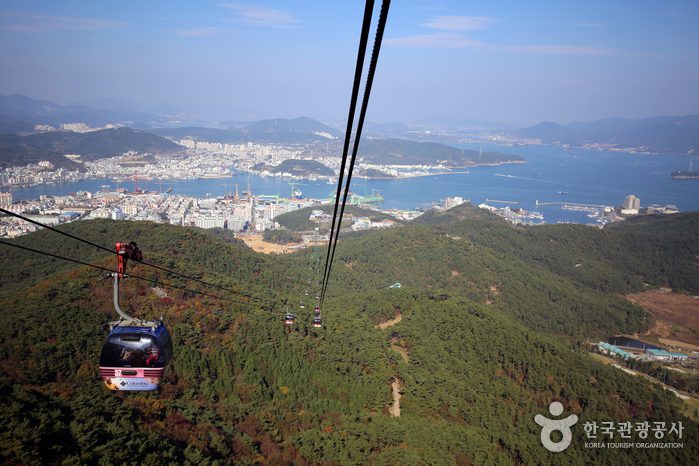
  • Mireuksan Mountain: The panoramic view of Tongyeong as seen from the cable car is unlike any other! Departing for the peak of Mireuksan Mountain at 461 meters above sea level, the cable car is the longest in Korea, stretching a distance of 1,975 meters! The height makes for a thrilling experience while the length allows riders to fully take in the beautiful views from every angle. 
  • Head over to the public beach for some free time.
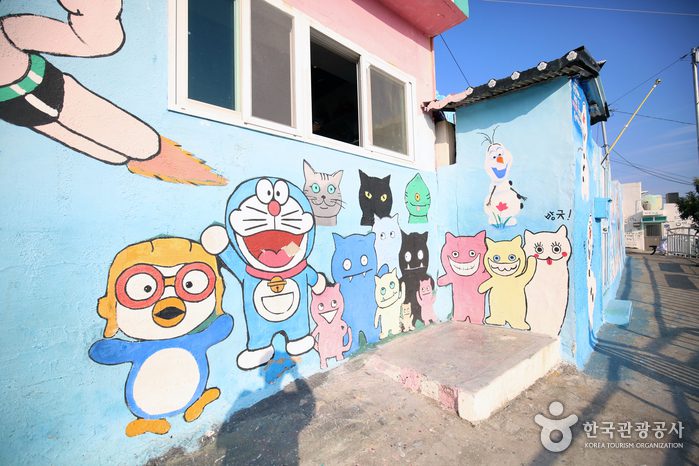
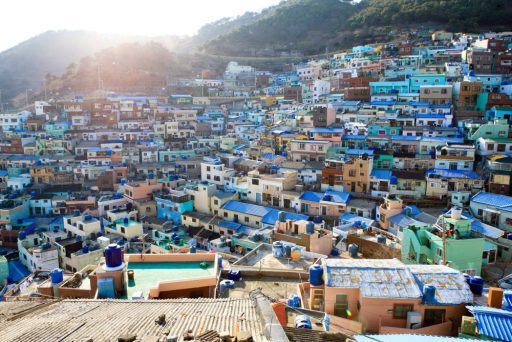
  • Dongpirang Mural Village: There are a lot of photo spots for tourist in this village. Tongyeong Agenda 21 whichi is an association in Tongyeong gathered people throughout the nation in order to paint murals on the walls of Dongpirang-gil Street in 2007. Thanks to the participants’ paintings, this hillside village on the sea became a new place, revitalized by the art. The view overlooking the sea and Gangguan Port is fantastic as well.
  • Samdo Sugun Tongjeryeong: the naval headquarters of the three provinces, which was under Admiral Yi Sun Sin’s commend. Sebyeonggwan Hall is constructed in 1605 to commemorate the military achievements of Admiral Yi Sun Sin. It is one of the buildings built in Joseon Dynasty with a largest floor area.
  • Sebyeonggwan Hall: It is constructed in 1605 to commemorate the military achievements of Admiral Yi Sun Sin. It is one of the buildings built in Joseon Dynasty with a largest floor area.
  • Dinner: Not provided
  • Overnight at Hotel in Tongyeong

Meals: Breakfast, Lunch.
Hotel: Geobukseon Hotel or similar ★★★ (Tongyeong)
Day 7Tongyeong - Busan

After breakfast, meet with a tour guide at hotel lobby and start the tour.

  • Gamcheon Culture Village: It is formed by houses built in staircase-fashion on the foothills of a coastal mountain, earning this village the nickname of “Machu Picchu of Busan.” The many alleys cutting through this community are vibrantly decorated with murals and sculptures created by the residents.
  • Huinnyeoul Culture Village: a cultural village community with the villagers. Huinnyeoul-gil, a representative original downtown area of Busan, was named because the meandering stream at the foot of Bongraesan Mountain resembles the appearance of white snow.
  • Jagalchi Market: It represents Busan and is Korea’s largest seafood market and famous throughout the country, selling both live and dried fish. After the Korean War the market solidified itself as a fish market. Most of the people who sell fish are women, so the vendors here are called Jagalchi Ajumma, “ajumma” meaning middle-aged or married woman in Korean. This market If you visit you can eat fresh raw fish right at the market. Even these days you can see women selling mackerel, sea squirts (ascidians) and whale meat on wooden boxes along the road outside of the market and along the shore.
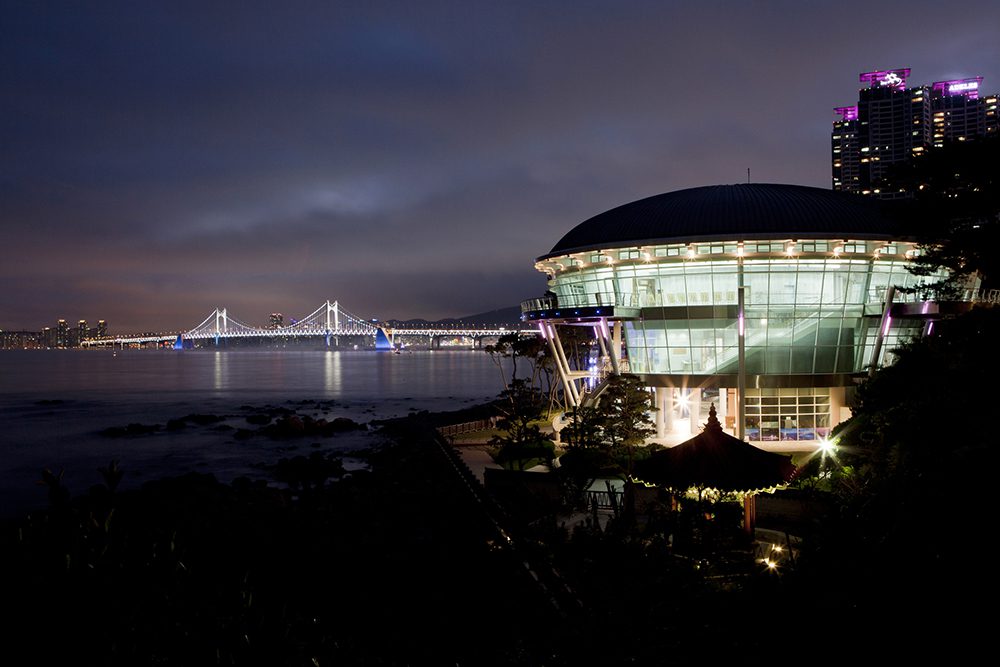
  • Gwangandaegyo Bridge: Pass by this bridge (Busan 66, also called Gwangan-daero) stretches over 7.4km from Namcheon-dong (Suyeong-gu, Busan) to Centum City (U-dong, Haeundae-gu). It is the longest bi-level bridge over the ocean in Korea. In addition to providing a quick way to get around, the bridge offers breathtaking views of nearby attractions, including the endlessly unfolding ocean, Oryukdo Island, Hwangnyeongsan Mountain, Gwangalli Beach, Dongbaekseom Island, and Dalmaji Hill. Equipped with thousands of LED lights, the bridge showcases a beautiful lighting exhibition at night that changes with the seasons. The bridge offers a majesty beauty when combined with nearby attractions during the day and a romantic atmosphere at night, attracting many residents and tourists.
  • Haeundae Dongbaekseom Island: also called Island of Camellias, is an island located off one end of Busan’s famous Haeundae Beach. Although the years of sedimentation have connected the island to the mainland, Dongbaekseom was originally an island and is still referred to as one.
  • Haedong Yonggungsa Temple: It is situated on the coast of the north-eastern portion of Busan. This superb attraction offers visitors the rare find of a temple along the shore line; most temples in Korea are located in the mountains. It was first built in 1376 by the great Buddhist teacher known as Naong during the Goryeo Dynasty. Haesu Gwaneum Daebul (Seawater Great Goddess Buddha), Daeungjeon Main Sanctuary, Yongwangdang Shrine, Gulbeop Buddhist Sanctum (enclosed in a cave), and a three-story pagoda with four lions can all be seen looking out over the ocean.
  • Dinner: Not provided
  • Overnight at Hotel in Busan

Meals: Breakfast, Lunch.
Hotel: Arban Hotel or similar ★★★ (Busan)
Day 8Busan - Gyeongju


After breakfast, meet with a tour guide at hotel lobby and start the tour.

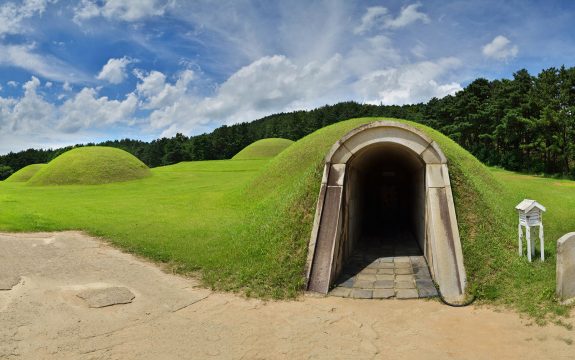
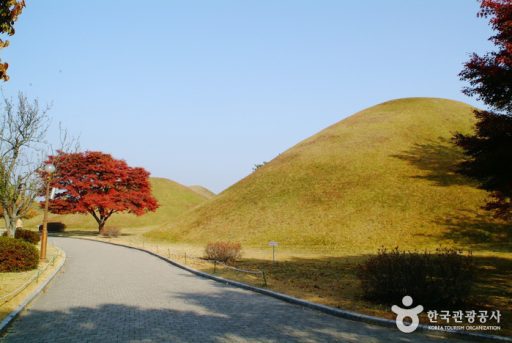
  • Daereungwon Tomb Complex (Cheonmachong tomb): Within Daereungwon Tomb Complex is Cheonmachong Tomb (Ancient Tomb No. 155), which was excavated in 1973. Cheonmachong Tomb consists of a wooden coffin placed inside an underground chamber mounded with boulders and earth, characterized as a typical upper class tomb of the Silla period. The mound has a height of 12.7 m with a diameter of 50 m, and consists of a layer of rocks collected from streams. Below the rock layer is a wooden chamber with a length of 6.5 m and a width of 2.1, reaching 2.1 m in height, with the wooden coffin at its center. A total of 11,526 artifacts were discovered within the tomb, including Cheonmado, an artwork considered to be highly valuable as it is Korea’s first artwork to be excavated from an ancient tomb.
  • Walk down Hwangridangil street, a culture street with a lot of shopping spots and cafes.
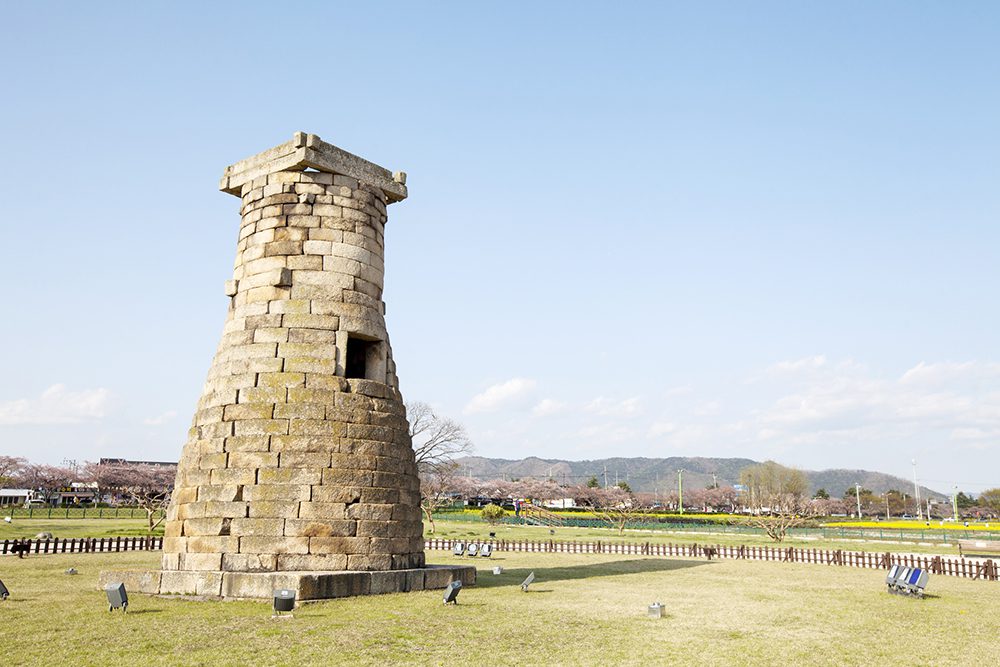
  • Cheomseongdae Observatory: It is the oldest existing astronomical observatory in Asia. Constructed during the reign of Queen Seon-deok (r. 632-647), it was used for observing the stars in order to forecast the weather. This stone structure is a beautiful combination of straight lines and curves, and was designated as National Treasure No.31 on December 20th, 1962.
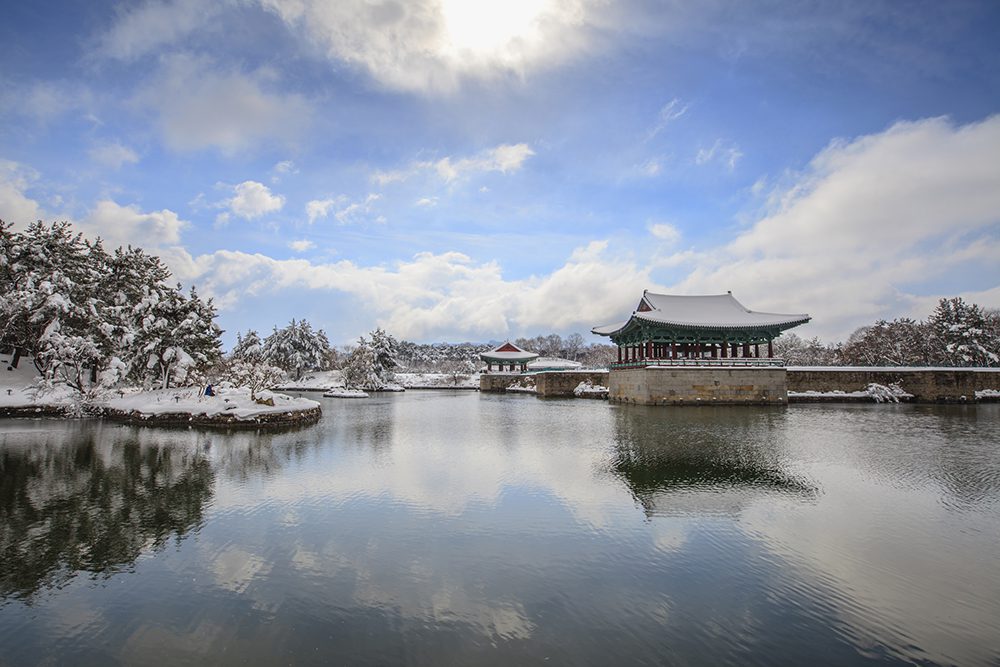
  • Gyeongju Donggung Palace (Anapji) and Wolji Pond: They were the secondary palace site which was used for the palace of the Crown Prince along with other subsidiary buildings and it also was the banquet site for important national event and important visitors. After the fall of Silla, the site was abandoned and forgotton. The pond was referred to as “Anapji” instead during the time of Goryeo and Joseon period. In the 1980s, pottery fragment with letters “Wolji” (a pond that reflects the moon) carved onto it was found, revealing the true name of the pond. After the discovery, the site has been renamed to the current Donggung Palace and Wolji Pond.
  • Bulguksa Temple: Bulguksa Temple is the representative relic of Gyeongju and was designated as a World Cultural Asset by UNESCO in 1995. The beauty of the temple itself and the artistic touch of the stone relics are known throughout the world. Even today, Bulguksa Temple is home to many important cultural relics.
  • Dinner: Not provided
  • Overnight at Hotel in Gyeongju

Meals: Breakfast, Lunch.
Hotel: Gyeongju GG Hotel or similar ★★★ (Gyeongju)
Day 9Gyeongju - Andong - Danyang

After breakfast, meet with a tour guide at hotel lobby and start the tour.

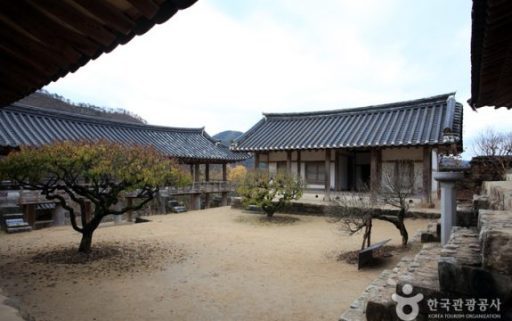
  • Byeongsan Seowon Confucian Academy [UNESCO]: The Byeongsan Seowon is a seowon located in the Byeongsan-ri village of Pungcheon-myeon county in the city of Andong, in North Gyeongsang province, South Korea. Seowon is a type of local academy that occured in the Joseon dynasty. In terms of architecture, Dosanseowon Confucian Academy complex can largely be divided into Dosanseodang compound and Dosanseowon compound. Dosanseodang area consists of living quarters and lecture halls where Toegye Yi Hwang, an eminent Confucian scholar, lived and taught his students. Dosanseowon was built after Toegye Yi Hwang passed away by his followers in legacy of his teachings as well as to pay respects to the deceased.
  • Andong Folk Village [UNESCO]: Hahoe Village is home to descendants of the Ryu clan of Pungsan and is well-known for its traditional houses. Birthplace of renowned scholars of the Joseon Period such as Gyeomam Ryu Un-ryong and Seoae Ryu Seong-ryong, the village became even more famous after Queen Elizabeth of England visited on April 21, 1999. Hahoe Village (translating to “Village Enveloped by Water”) gets its name from Nakdong River, which flows around the town’s perimeter. The village is located at the foothills of Hwasan Mountain, an offshoot of Taebaek Mountain that rises up to the east. The center of the village is populated by large tile-roofed houses belonging to the Ryu clan, adding their own unique charm to the surrounding thatched roofs.
  • Buyongdae Cliff :which is at the end of Taebaeksan Mountain Range. From the top, you can overlook the whole Andong Folk Village.
  • Dinner: Not provided
  • Overnight at Hotel in Danyang

Meals: Breakfast, Lunch.
Hotel: Tourist Hotel Edelweiss or similar ★★★ (Danyang)

Day 10Danyang - Seorak Mountain - Sokcho

After breakfast, meet with a tour guide at hotel lobby and start the tour.

  • Danyanggang Jando Trail: A 1.2-kilometer-long trekking path along Namhangang River (South Hangang River). The Namhangang River, which is the main source, originates from Taebaek-si in Gangwon-do. The water runs north through Goljicheon Stream in Samcheok-si and then passes through Gwangdong Dam before flowing into Songcheon Stream.
  • There are various attractions nearby, including Mancheonha Skywalk, offering a tour experience that covers geology and history.
  • Gwongeumseong Fortress: It is the site of a castle ruins located on Seoraksan Mountain, and it is also known as Mt. Onggeumsan Castle, or Toto Castle. It is located on the steep Dolsan Mountain
  • Sinheungsa Temple: Sinheungsa is a temple which used to be called Hyangseongsa, built by Jajangyulsa (590~658), who traveled to famous mountains all over the nation, in Queen Jindeok’s(?~654) 6th year of reign. On the path to Sinheungsa, there is a great bronze statue called Bronze Jwabul Statue, which is well over 10 meters high. Just beyond the statue, which is on a granite terrace, there is a bridge to the right called Hyeonsugyo, which was newly built for crossing the ravine.
  • Dinner: Not provided
  • Overnight at Hotel in Sokcho

Meals: Breakfast, Lunch.
Hotel: The Class 300 Hotel or similar ★★★ (Sokcho)

Day 11Sokcho - Goseong - Seoul

After breakfast, meet with a tour guide at hotel lobby and start the tour.

  • Move to Goseong Unification Observation Tower and Goseong DMZ Museum, where you can see the Haegeumgang River and the islands nearby as well as get a glimpse of various peaks of Geumgangsan Mountain (North Korea).
  • Dinner: Not provided
  • Overnight at Hotel in Seoul

Meals: Breakfast, Lunch.
Hotel: Mayplace Hotel Seoul Dongdaemun or similar ★★★(Seoul)

Day 12Departure from Incheon

Meals: Breakfast.

  • After breakfast, you will meet with a KOREAN-SPEAKING DRIVER ONLY at hotel lobby and transfer to Incheon Airport for departure.

Please note:

. If the departure flight on the final day of the tour is scheduled earlier than the hotel’s designated breakfast hours and breakfast service will not be available.

. No refunds or compensation shall be provided in such cases.

. The airport transfer service provided on the final day of the tour is fixed and cannot be rescheduled to another date.

FAQ

Requirements for participating guests such as age, nationality, health, etc

  1. Some of our tours may include activities such as walking long distance and hiking.
  2. It is your responsibility to consult with your physician regarding your health condition and ability to travel long distances. Please let us know your needs when booking. In case we cannot provide the service, you need to be accompanied by a companion who will be responsible for independently providing the needed assistance.

What kind of experience is at hotel

  1. 7N/ Twin sharing room based, and customer will be charged for changing hotel or room once upon arrival.

Travel vehicles

We always arrange convenient and safe vehicles with experienced and courteous drivers, equipped with air conditioner and heater.

Cancellation & Refund Policy

  1. Cancellation policy for one day tour will be automatically applied as below:
    • 100% refund if cancelled earlier than 60 days before the departure date (CST 16:00), with a USD $100.00 handling charge per person.(KST 16:00PM)
    • Cancellations made up to 60 days prior to the tour start date are eligible for a 50% refund of the total tour fee. (KST 16:00PM)
    • Cancellations made within 30 days of the tour start date are non-refundable. (KST 16:00PM)
  2. If you need to change the date, please cancel and make a new booking. Regular cancellation policy will be applied.
  3. Personal/ Medical/ Bad weather/ Flight cancellation/ Natural disaster/ or any other reasons that we cannot control are NO EXCEPTIONS to the cancellation policy and NO REFUND will be done by the company according to our Cancellation policy.
  4. Written notice of cancellation must be received by Qualitour Holiday either by email or via our website. Oral cancellation will not be accepted.
  5. If for some personal reasons the client wants to cancel the tour once it already started, NO REFUND will be done by the company.

Adjustment and Responsibility Policy

  1. We reserve the right to change the tour prices with or without notice due to exchange rate fluctuation.
  2. As a result of various operational factors, usually flight delays and schedule changes, there may be a slight change to the arrangements.
  3. We reserve the right to adjust/change our Terms & Conditions without prior notice
  4. Meal menu subject to change.
  5. We have NO RESPONSIBILITY for any Damage/Accident/Death/Loss/Sickness/Injury/Natural disaster/Political or Personal reasons arising from activities during the trip.
  6. You are responsible for respecting the authority and following the directions of the tour guide and Korean laws during a tour.

Contact us

Leave us your message and we'll get back to you as soon as we can!